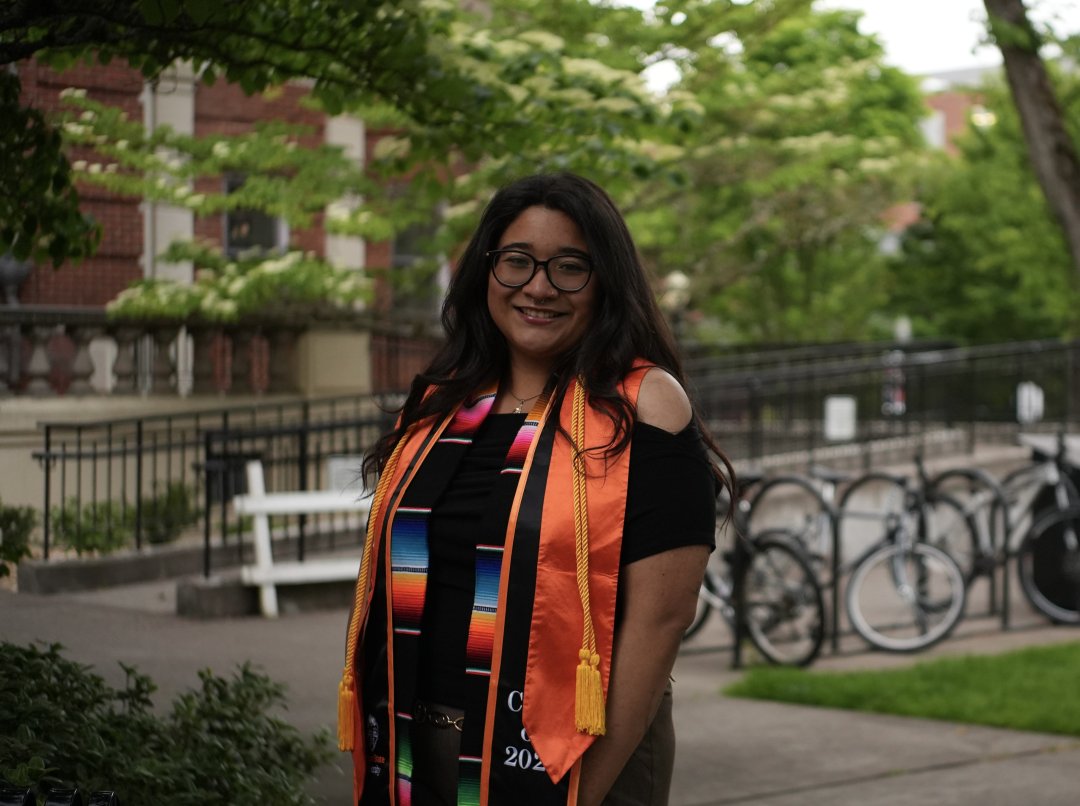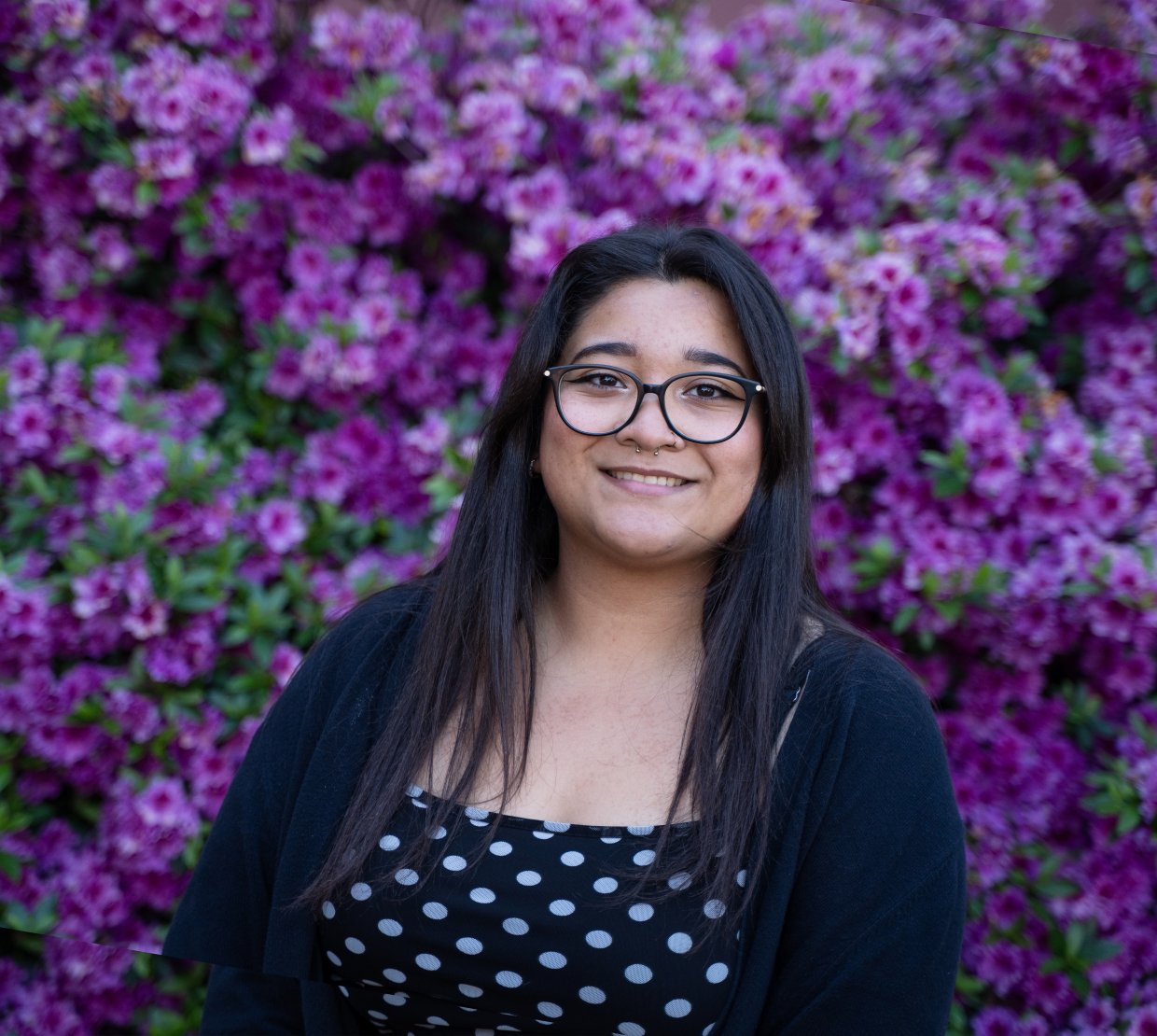
It wasn’t often they were able to schedule an appointment with a neurologist. There were few opportunities to in the small, rural community Biochemistry and Biophysics senior Jessica Chavez Chairez grew up in, but with her father’s seizure disorder, receiving that care was critical.
When she accompanied him to an appointment as a child, she was amazed to see that something as small as a pill could influence the brain and ease the symptoms of her father’s condition. Hearing the neurologist explain the science behind it was fascinating, but even more impactful was hearing her explain it in Spanish.
“I remember telling the doctor how cool she was. She told me in Spanish, ‘You could do this, too,’” Chavez Chairez said.
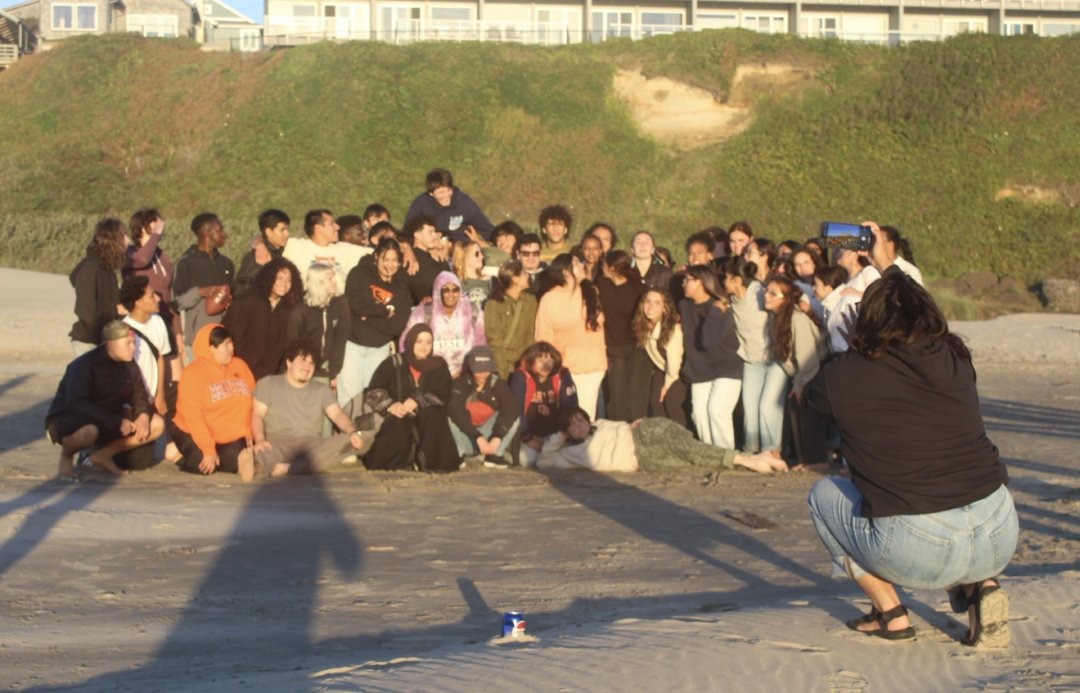
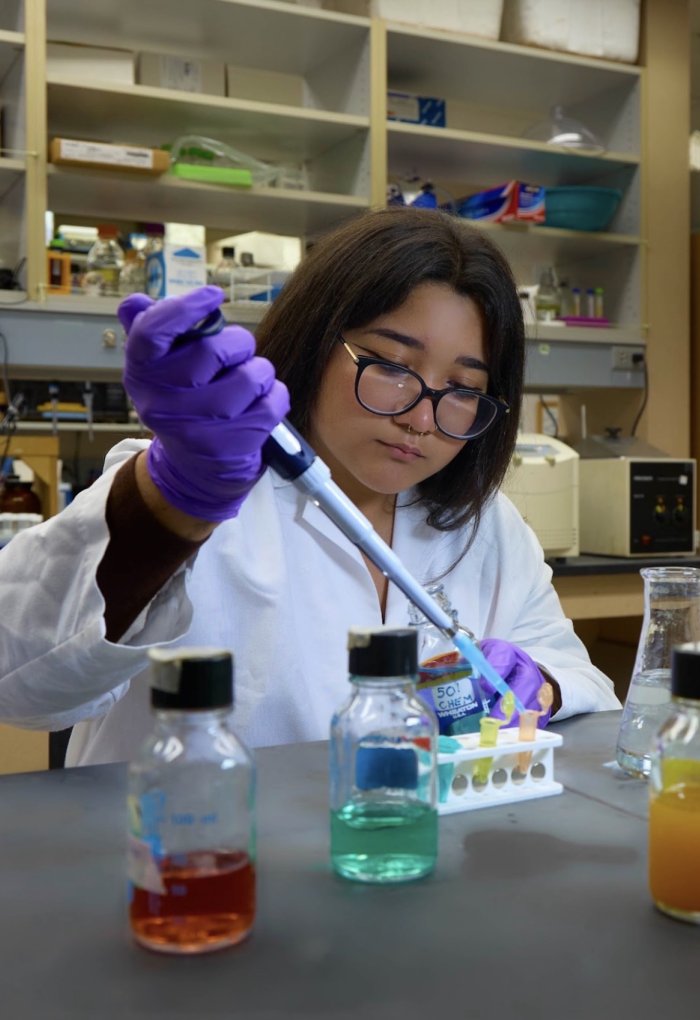
That conversation was a pivotal step to envisioning and ultimately finding herself in science. Like the neurologist who first bridged the gap between identity and STEM for her, Chavez Chairez has since built communities emphasizing that curiosity and drive, not a specific background, are what make a scientist. Whether spearheading a mentoring program, earning prestigious research opportunities or leading clubs to national awards, she has left a profound mark on her path to graduation at Oregon State.
The uncharted path
Chavez Chairez grew up in Hermiston, Oregon, a rural agricultural town of about 20,000 people. The daughter of agricultural migrant workers, her early environment was deeply rooted in a supportive Hispanic community.
“I feel like it really shaped me because I grew up around a lot of Latinos,” she said. “I’m very lucky that I grew up around a lot of cultural representation.”
Yet, higher education and professional science careers felt worlds away. Her parents had not completed middle school, and her older siblings didn’t attend a four-year university. Science was not a guarantee, but instead something she had to build her way toward. Her turning point arrived when she joined a high school organization called Generation College, which guides first-generation students through the higher education landscape. The program demystified the application process, provided fee waivers, covered SAT costs and introduced her to older peers who served as mentors.