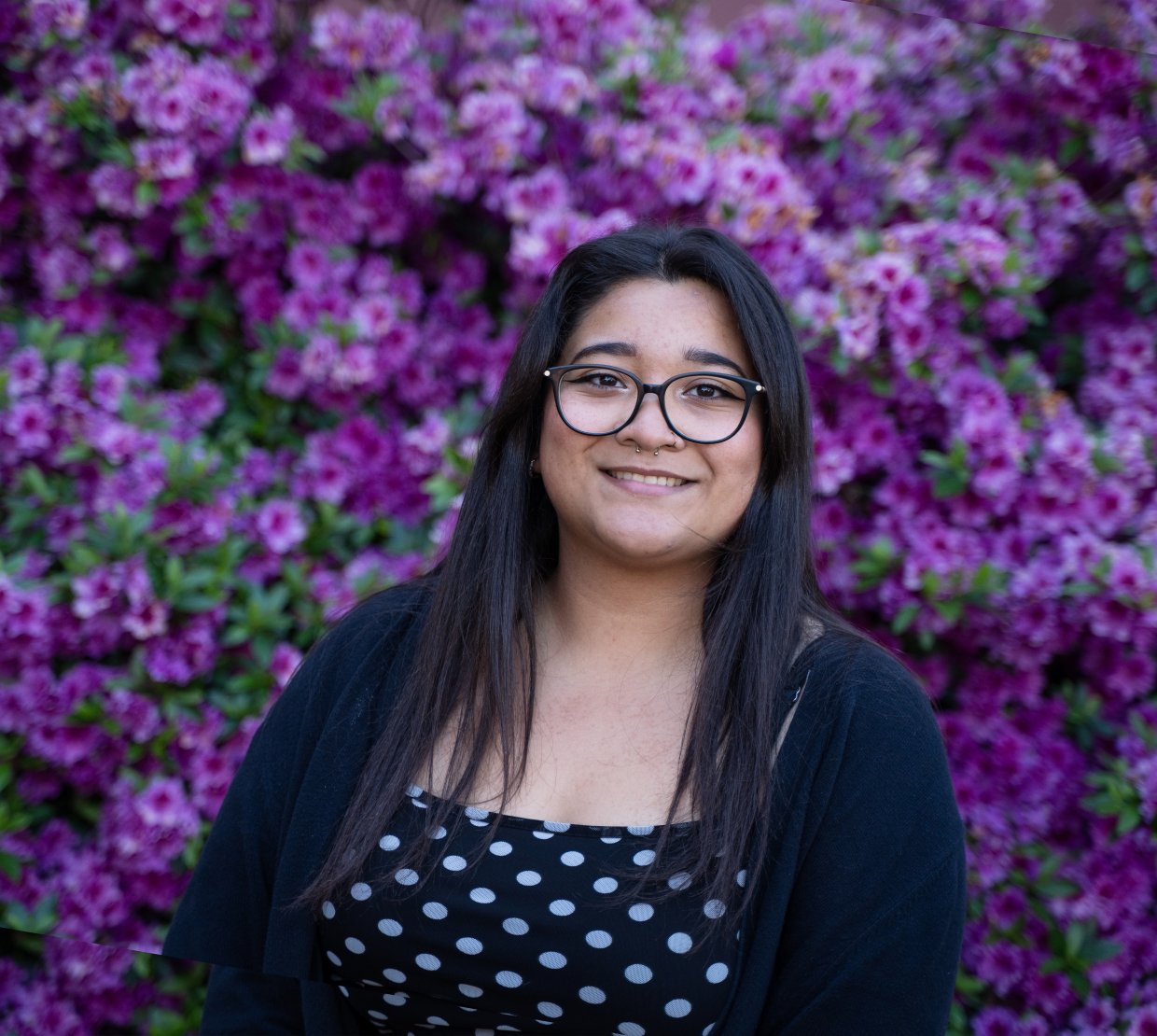
A dark-haired woman smiles in front of violet flowers, wearing round glasses, a black-and-white polka dot shirt, and two small piercing on her nose.

Jessica Chavez Chairez, Class of ’26: From brains to barriers, biochemistry senior tackles it all

By Elana Roldan

It wasn’t often they were able to schedule an appointment with a neurologist. There were few opportunities to in the small, rural community Biochemistry and Biophysics senior Jessica Chavez Chairez grew up in, but with her father’s seizure disorder, receiving that care was critical.

When she accompanied him to an appointment as a child, she was amazed to see that something as small as a pill could influence the brain and ease the symptoms of her father’s condition. Hearing the neurologist explain the science behind it was fascinating, but even more impactful was hearing her explain it in Spanish.

“I remember telling the doctor how cool she was. She told me in Spanish, ‘You could do this, too,’” Chavez Chairez said.

That conversation was a pivotal step to envisioning and ultimately finding herself in science. Like the neurologist who first bridged the gap between identity and STEM for her, Chavez Chairez has since built communities emphasizing that curiosity and drive, not a specific background, are what make a scientist. Whether spearheading a mentoring program, earning prestigious research opportunities or leading clubs to national awards, she has left a profound mark on her path to graduation at Oregon State.

The uncharted path

Chavez Chairez grew up in Hermiston, Oregon, a rural agricultural town of about 20,000 people. The daughter of agricultural migrant workers, her early environment was deeply rooted in a supportive Hispanic community.

“I feel like it really shaped me because I grew up around a lot of Latinos,” she said. “I’m very lucky that I grew up around a lot of cultural representation.”

Yet, higher education and professional science careers felt worlds away. Her parents had not completed middle school, and her older siblings didn’t attend a four-year university. Science was not a guarantee, but instead something she had to build her way toward. Her turning point arrived when she joined a high school organization called Generation College, which guides first-generation students through the higher education landscape. The program demystified the application process, provided fee waivers, covered SAT costs and introduced her to older peers who served as mentors.
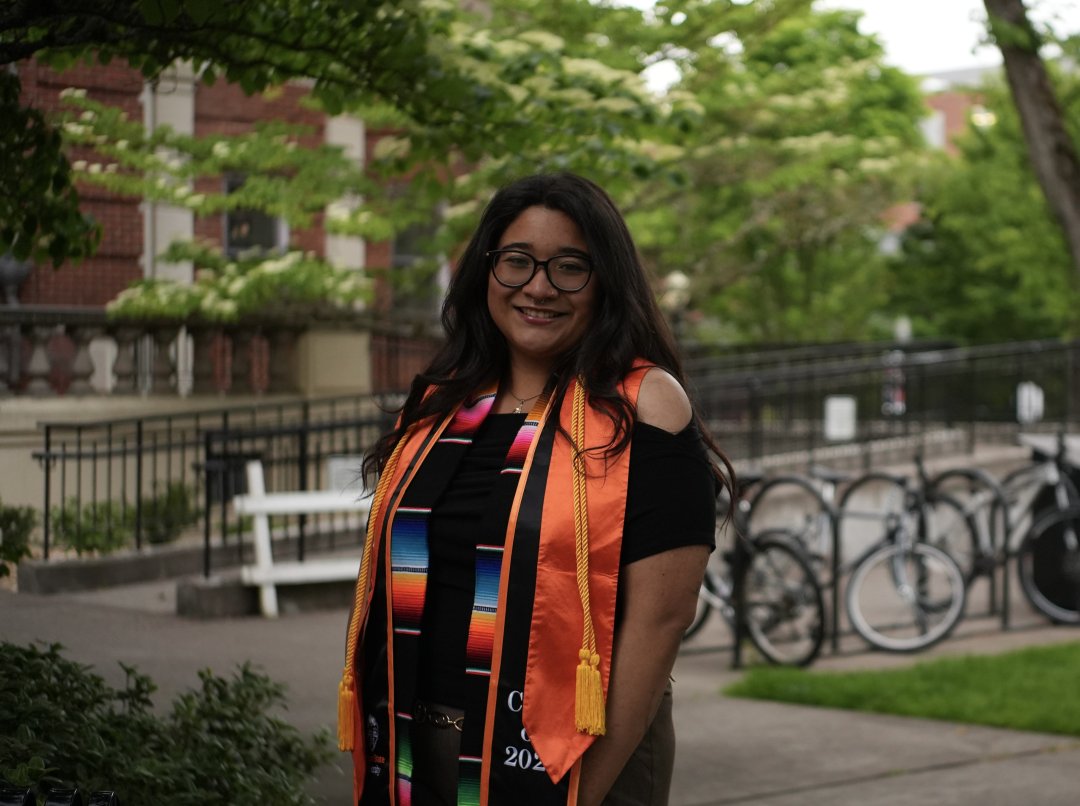
A woman with glasses smiles in a black dress with OSU and cultural graduation regalia amidst a sunny campus backdrop.

Growing up with a strong cultural identity, it was important for Chavez Chairez to be in community during college. Programs like ROOTS and STEM Leaders helped her find that at Oregon State.

When it came time to select an institution, Oregon State University stood out. The homey campus feel, active cultural centers and abundant undergraduate research opportunities sealed her decision.

Her transition to OSU began 10 days before the standard move-in date through an immersive summer bridge program. Run by the organization now known as Reaching Our Opportunities through STEM, the bridge is geared toward underrepresented students in STEM and helps them acclimate to campus and understand its extensive institutional resources. It was an opportunity for her to build a network of people with shared experiences that can otherwise feel isolating.

“You meet people who are also in STEM and who are trying to navigate this world and their family's world, and trying to merge them together,” she said. “I'm so glad that I stayed connected with the program because it honestly has gotten me through college.”

In her first year, ROOTS played a pivotal role in determining what major she wanted within science. At the organization's regional conference in Portland, she walked into a workshop focused on non-traditional pathways to doctoral training.

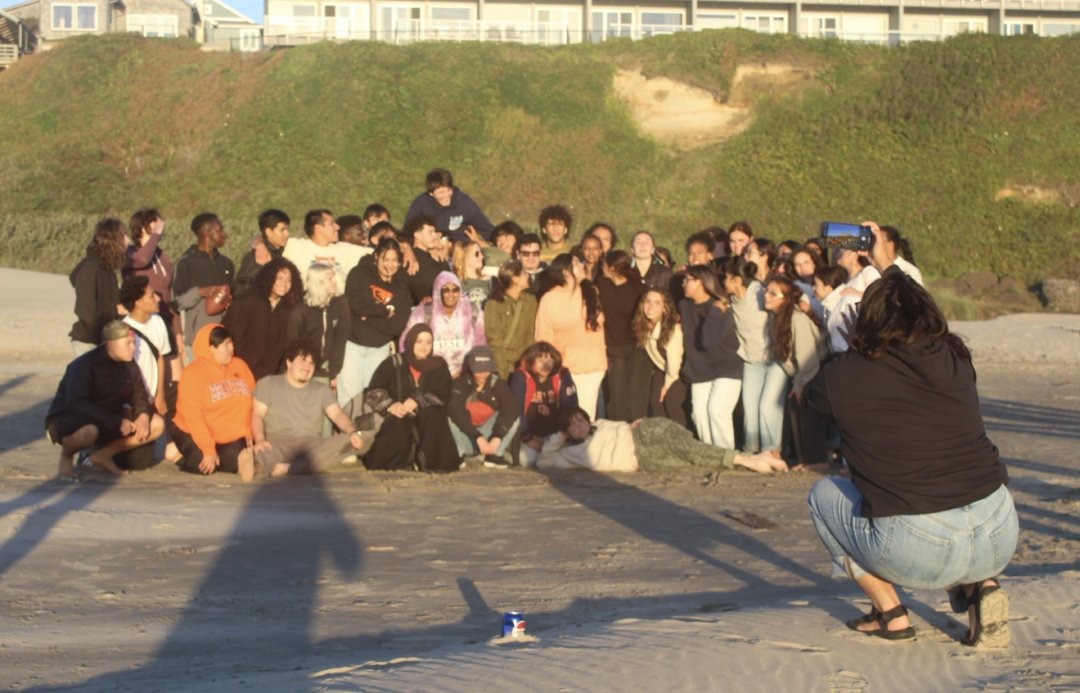
Under a setting sun, a large group of students huddle on a beach while a woman in the foreground kneels to take their picture.

Chavez Chairez worked her way from mentee to head mentor of ROOTS to support other underrepresented STEM students.

“The speaker was talking about his journey and how he learned about graduate school, and that really flipped the switch in me,” she said. “In my head it was something super unattainable, like something really out there that only certain people had. After I left that workshop, I said, ‘I’m going to figure out how I can do this.’”

Days after returning to Corvallis, she met with her academic advisor and officially changed her major to biochemistry and biophysics with a neuroscience option, aligning her academic requirements with her long-term goal of teaching at the university level.

Finding research on and off campus

Alongside her experience with ROOTS, Chavez Chairez found her footing in OSU’s massive research ecosystem thanks to the help of STEM Leaders. The program integrates underrepresented students who may not otherwise have guidance into peer-mentored undergraduate research. Through it, she set her sights on the highly competitive neuroscience lab of Kenton Hokanson, director of the Electrophysiology Facility, and secured one of three coveted undergraduate spots. There, she mastered a complex electrophysiology technique called whole-cell patch clamp, a delicate method used to examine neurons.

“We can pull up a part of the cell’s membrane and burst it open, which gives us access to the entire cell. We're basically able to see what is changing within the cell, and that gives us insights on if it is electrically working the way a regular cell in your brain would,” she explained.

Her dedication earned her the College of Science Summer Undergraduate Research Experience award. The funding allowed her to step away from external employment and dedicate 40 hours a week to her project, accelerating her development as an independent thinker.

Chavez Chairez's research journey later expanded beyond Corvallis. Last summer, she was awarded a position in the Oregon Health & Science University Equity Research Program, a highly competitive summer internship in Portland. There, she pivoted to cancer biology, designing a project to see if specific biomarkers could be detected in cerebrospinal fluid to aid in the early diagnosis of elusive central nervous system tumors. The intensive opportunity further forged her scientific identity.

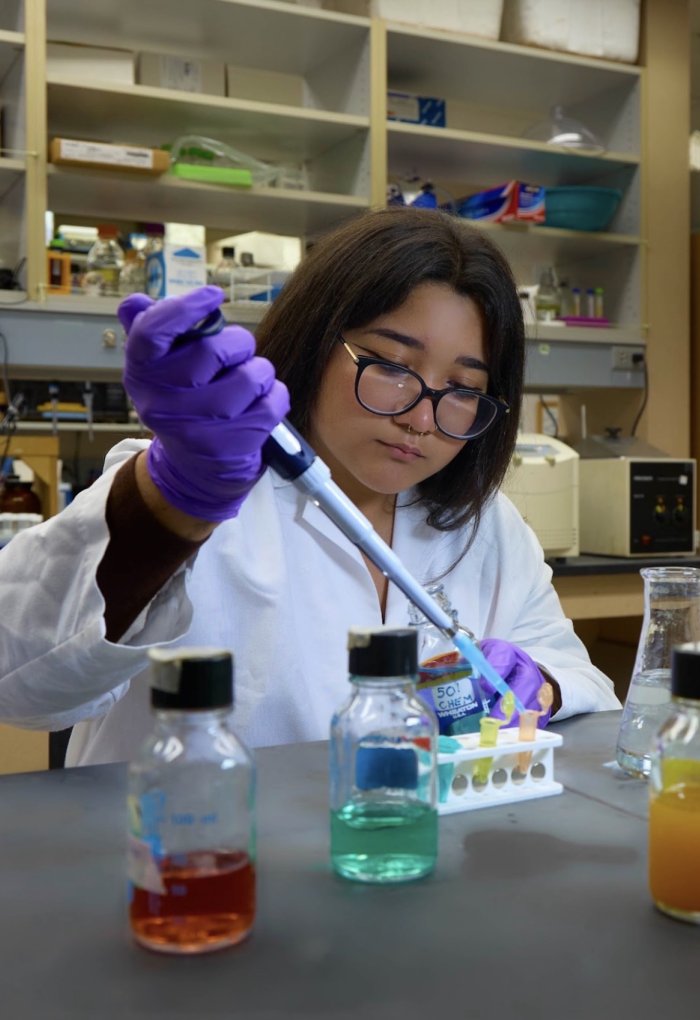
A woman wearing glasses and a white lab coat focuses on pipetting brightly colored solutions into small tubes in the lab.

Chavez Chairez found a wide breadth of research opportunities through programs at Oregon State, then built on her foundation through experiences like an OHSU internship.

"I think that really helped me see myself more as a scientist because I was doing a lot of independent work," Chavez Chairez said.

This wouldn’t be her only career-defining experience as an undergraduate. Just before the summer internship, she traveled to Puerto Rico as part of a study abroad program centered on public health and equity. Seeing programs designed to address the complexities of addiction, as well as harm-reduction public health initiatives on the island, reshaped her career aspirations.

"It opened my eyes to how important having these programs that help people maintain healthy lives are, because health is a human right," she said.

The experience has inspired her to blend her rigorous molecular training with public health and healthcare policy during her upcoming gap years and future doctoral studies.

A lasting mark of community

While her academic and technical resume is extensive, Chavez Chairez’s defining undergraduate legacy lies in the vibrant multicultural communities she built, led and sustained at Oregon State.

After experiencing firsthand the profound impact ROOTS and its support can have on incoming students, she climbed the ranks to become the program’s head mentor. This position saw her guide cohorts of incoming underrepresented STEM students through the rigorous transition to college life.

Her leadership extended to student organizations as well. As vice president of the Society for the Advancement of Chicanos/Hispanics and Native Americans in Science, Chavez Chairez spearheaded many of the club’s campus events, which culminated in the club winning the Chapter of the Year Award from the national organization. She excelled at creating environments where students could find academic and cultural solidarity, and even came full circle by becoming a peer mentor for STEM Leaders, advising incoming students just as she had been.

Four women smile for a picture in stadium stands packed with Beaver fans during a basketball game.

After four years at Oregon State, Chavez Chairez is leaving with confidence and community as she continues her path in science.

As she prepares to walk across the graduation stage, Chavez Chairez is confident that the network of empowerment she helped construct will endure long after she leaves Corvallis.

“The people who I mentored, they're going to take that with them wherever they go, and I'm also going to take all the lessons I learned from them with me,” she said. “I feel like that truly is what has defined my undergraduate experience.”