Kennedy Duff smiles for the camera in front of three colorful portraits.

Biology student scrubs in for medical preceptorship at largest hospital in Corvallis

By Kaitlyn Hornbuckle

During her fourth year at Oregon State University, biology student Kennedy Duff witnessed her first joint reconstruction in the operating room.

From hip replacements to bone tumor removals, she learned firsthand what it takes to provide the best possible care and help patients maintain a high quality of life. By shadowing orthopedic surgeon Dr. Nicholas Tedesco through a medical preceptorship, Duff observed complex surgeries related to orthopedic oncology and joint reconstruction.

A preceptorship is similar to an internship, where a qualified medical professional mentors a student through one-on-one teaching and observation. It is an essential step for students entering the medical field in the future.

Dressed in blue scrubs as an intern at the Good Samaritan Regional Medical Center, the largest hospital in Corvallis, Duff stood behind teams of medical professionals working together at the operating table. With instruments and rags at the ready to monitor blood loss, she watched as doctors broke bones and carefully reconstructed or removed harmful tissues.
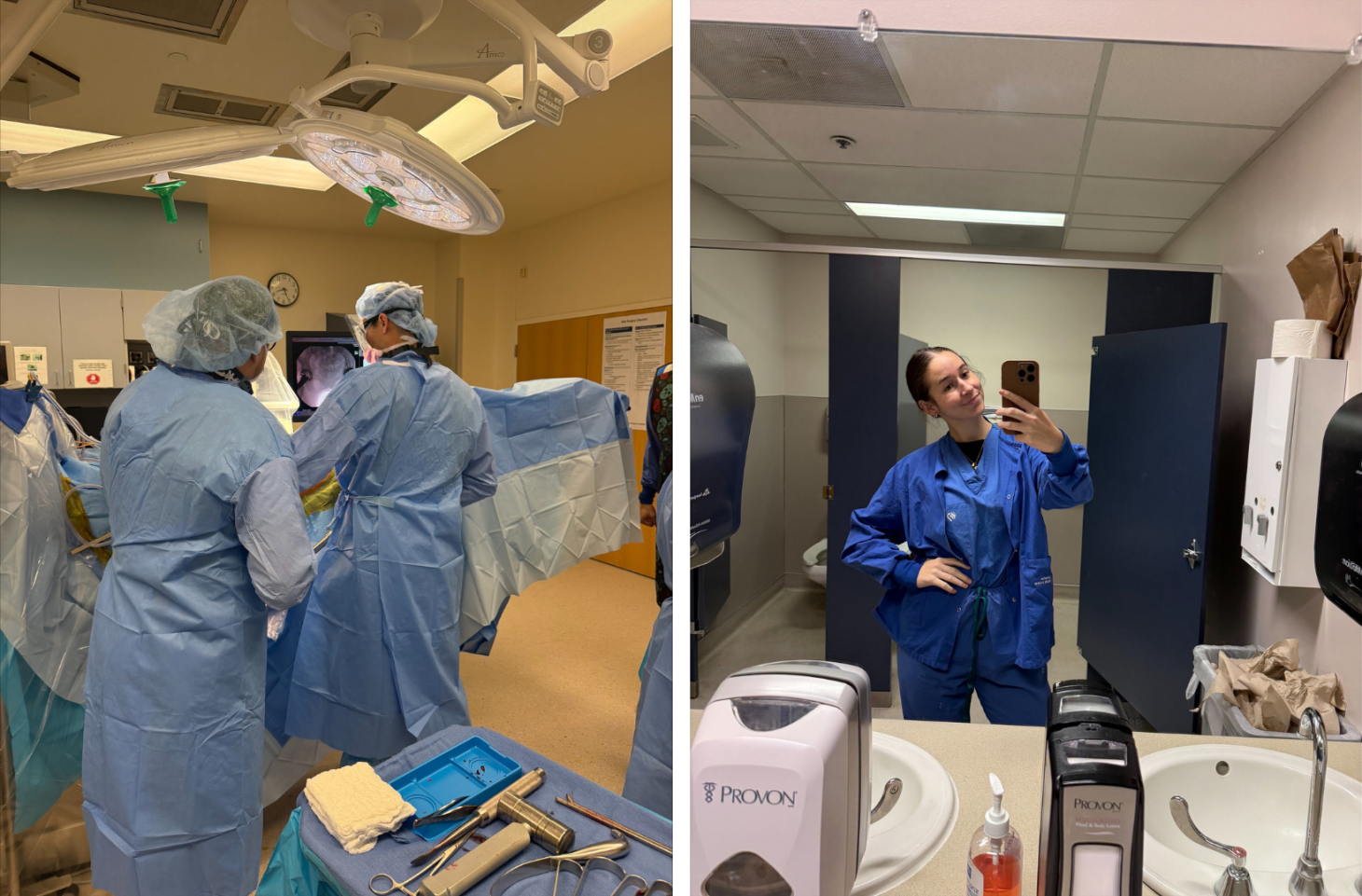
A team of medical professionals (left) conduct surgery in the operating room. Kennedy Duff (right) takes a mirror selfie wearing blue scrubs.

Duff shadowed incredible orthopedic surgeries in orthopedic oncology and joint reconstruction.

“I’ve always loved learning about the human body. There’s so much going on inside of us, even in our cells, that keeps us alive. It’s a little overwhelming,” she said. “I love helping people and providing them with care and comfort. The main difference I want to make in the medical field is helping people in pain return to a better quality of life.”

Every day in the operating room brought something new. A forequarter amputation for cancer, unilateral and bilateral total knee arthroplasties, and treatments for lipomas are some of many procedures she witnessed in the operating room. She also learned how long-term health for patients can be improved through less invasive treatments.

How she landed a life-changing medical experience

Precepterships, like this one, are unique experiences where students are mentored by experienced medical professionals (preceptors). Students observe clinical procedures and patient appointments, gaining insight into the realities of a medical career beyond the classroom. For her, this experience made her passion for medicine even stronger.

Duff had just the right resources in the College of Science to help her advance her future career in medicine. Her favorite courses made an incredible impact in understanding how the human body worked. From working with real cadavers in her anatomy classes to understanding organic chemistry in a fun way with Senior Instructor Cassandra Siler, she wanted to apply her knowledge to the real world.

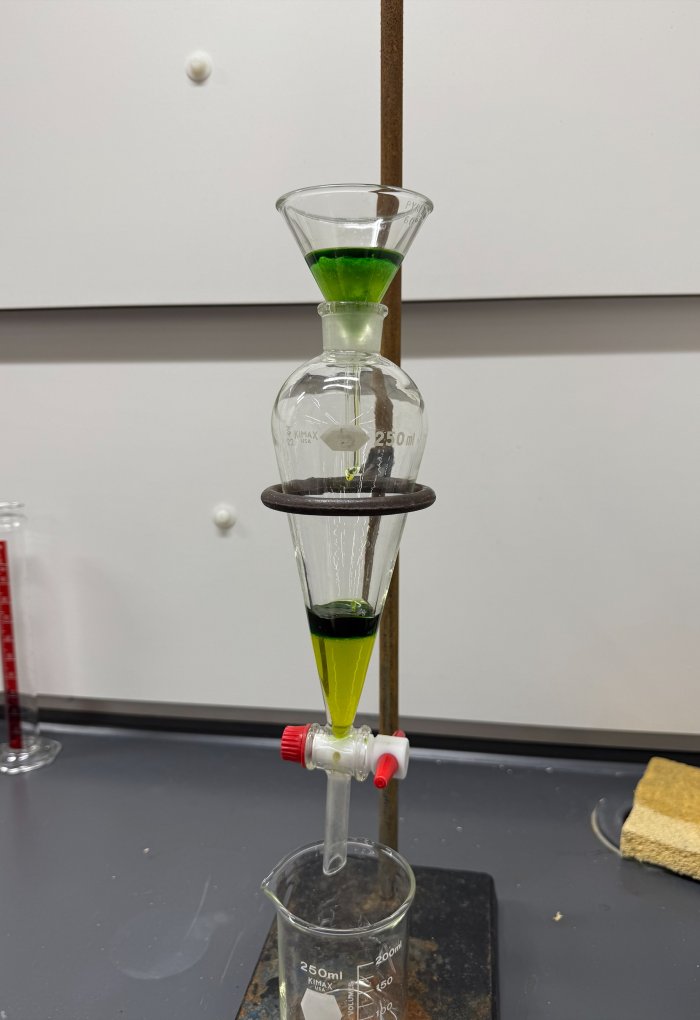
Green liquid drips from a Pyrex glass cone and collects at the bottom of a Pyrex 250 mL Pear-Shaped Squibb Separatory Funnel. The liquid separates with a dark green color sitting on top of light green.

Conducting fun experiments in the organic chemistry lab is one of Duff’s favorite classes.

After expressing interest, Integrative Biology Advisor Hannah Wohlwend recommended that she apply to the medical preceptorship program. Offered by the College of Science at Oregon State, this program matches high-achieving students with certified physicians at partner clinics.

As a one credit course, this program typically lasts up to one academic term. Despite fierce competition, Duff took the leap and applied online, landing a spot that will positively impact how she views medicine for the rest of her life.

“There is always so much research being done and so many changes in medicine that it is important to keep learning and keep growing.”

By applying her new understanding of the human body from the courses she took and shadowing her preceptor for 27 hours over the term, she learned a lot about how teams of medical professionals worked together. In the operating room, the experience was intense, fast-paced and graphic, yet crucial to understanding how teams deliver the best possible care for a wide range of patients.

“The teamwork of physicians, physician associates, registered nurses, resident physicians, surgical technicians and medical device representatives was apparent in surgical and clinic settings. It ensured that each and every patient received amazing medical care,” she said. “I also learned the importance of patient education and preventative medicine.”

Outside of the operating room, Duff followed her preceptor during 20-minute clinic appointments, including pre- and post- operation visits and consultations.

Kennedy Duff takes a selfie in an office, wearing a mask and scrubs, with a student badge attached.

Duff spent quality time observing office visits for a variety of patients.

After each appointment, her preceptor walked her through the charting process, documenting every interaction, diagnoses, notes for future care and extensive insurance paperwork. Even though the charting step is extensive and time consuming, it helps ensure patients receive the care they need in the current healthcare system.

“The biggest thing you have to do in medicine is stay humble,” Duff said. “Because no matter how much education you have and how much training you do to provide medical care, there are always times where you can make mistakes and things that you can learn. There is always so much research being done and so many changes in medicine that it is important to keep learning and keep growing.”

Following her dreams out of state

A Colorado-native, Duff was ready for a new adventure. After visiting universities, Oregon State’s red brick buildings, beautiful campus and hands-on human anatomy experience made Corvallis her new home for four years.

Her passion for healthcare started at a young age. As a kid, she received medical treatment for a rare genetic orthopedic disorder that made one leg longer than the other. But after undergoing several surgeries, the positive treatment process influenced her love for how the human body works.

This launched her on a journey where she aims to build a career in medicine as a way to give back, and help others and improve their quality of life just like she experienced.

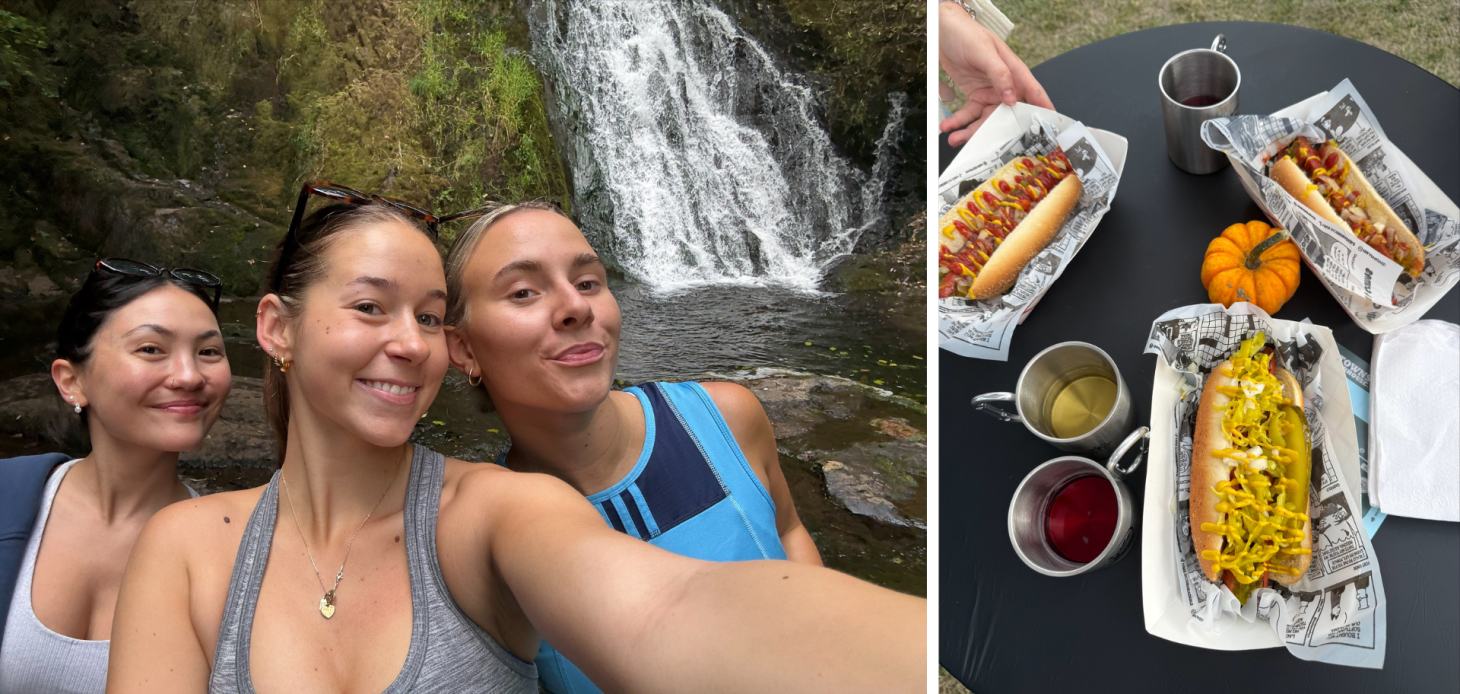
To the left, Kennedy Duff and two of her friends smile in front of a scenic waterfall in Oregon. To the right, three prepared delicious hot dogs, three metal cups, and a little pumpkin sit on top of a black round table outside.

Duff and her friends hike together to iconic waterfall spots and eat yummy food at campus events.

Before her preceptorship, she landed a part-time position working at an assisted-living facility. There, she fell in love with helping people. That opportunity combined with her competitive academic background in the College of Science set the stage for landing her preceptorship early in her career.

When she’s not visiting the Mole Hole for chemistry tutoring or learning about the human body, she’s eating breakfast at Caves Corvallis, her favorite pizza at American Dream or visiting fresh waterfalls and coastal hikes with her new best friends.

After graduating from Oregon State, Duff plans to take a gap year working as a caregiver or an office job with health care providers back home in Littleton, Colorado. In ten years or less, she hopes to practice medicine as a physician’s assistant and raise a family of her own.